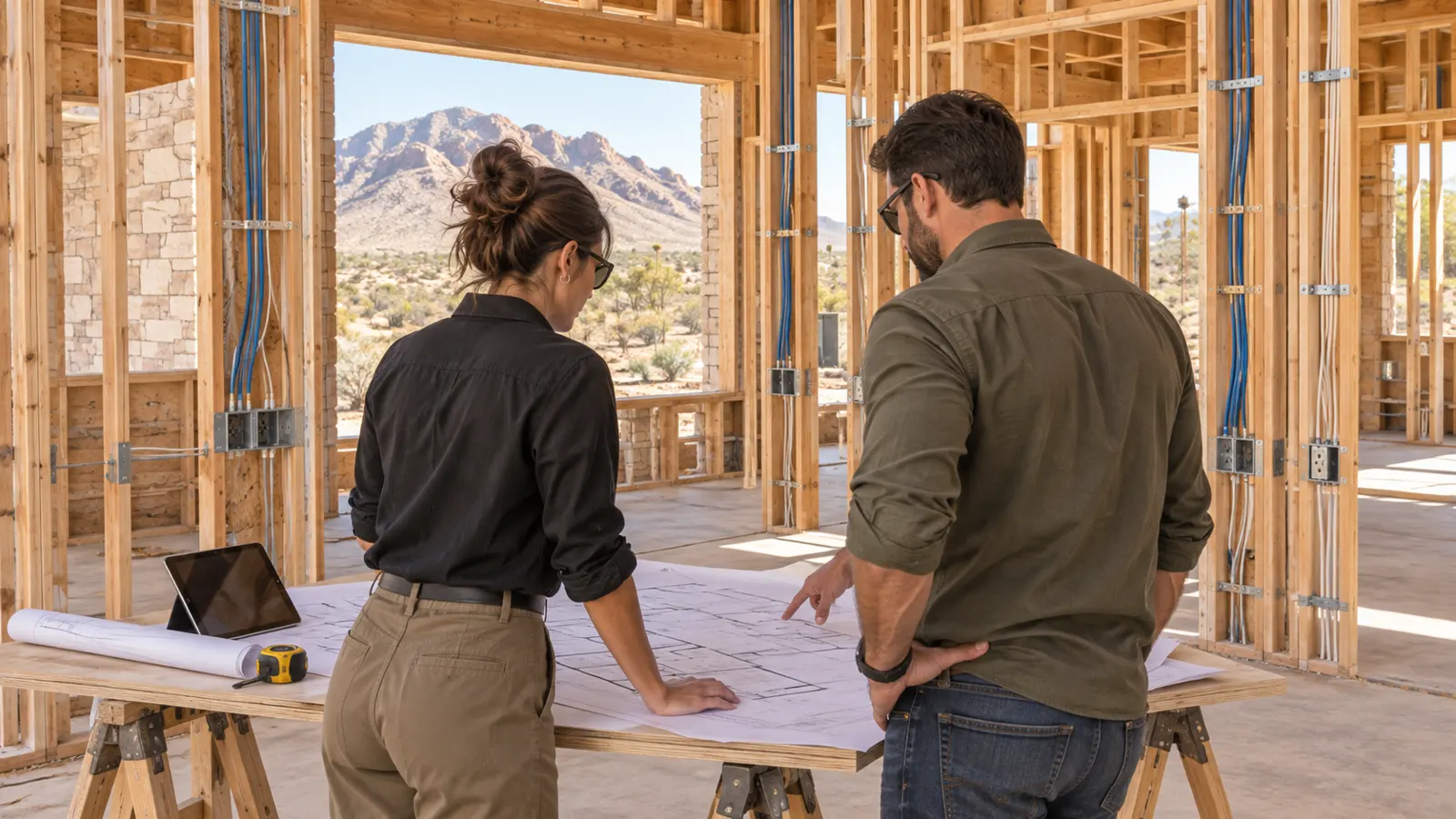
Short answer: Bring a technology integrator in during design, before framing. Decide device locations, the equipment closet and shade pockets before prewire, because changes after drywall cost far more and look worse.
Why timing matters
The finished experience of a smart home, from flush speakers and recessed shades to a single keypad instead of a bank of switches, is decided early. Once drywall is up, adding a wire, moving a keypad or recessing a shade pocket means cutting, patching and repainting. Planned early, most of these details cost little or nothing.
Phase 1: Design development (before framing)
This is the most valuable time to involve an integrator. Decisions at this stage include:
- Equipment location. A dedicated closet or space with enough room for a rack, dedicated power and ventilation. In El Paso, heat management matters.
- Shade pockets. Recessed pockets above windows must be framed in. They can’t be added easily later.
- Theater or media room. Room dimensions, risers, soffits and HVAC all affect picture and sound.
- TV locations and blocking. Large displays need blocking in the wall and a clean path for power and cabling.
- Outdoor spaces. Conduit for patio TVs, speakers and landscape areas before hardscape is poured.
Phase 2: Client design and proposal
The homeowner, builder and integrator agree on scope: which rooms get audio, where keypads go, which windows get motorized shades, how many cameras, and how the network covers the property. A written proposal turns that into a clear budget.
Phase 3: Prewire (after framing, before insulation)
Every device location is marked and wired back to the equipment location. Good prewire practice includes:
- Labeling both ends of every cable.
- A dedicated wire run to every motorized shade, so each one can be controlled and serviced on its own.
- Wired locations for Wi-Fi access points, rather than relying on a single router.
- Coordinating keypad and dimmer locations with the electrician so they share clean, consolidated wall boxes.
- A walkthrough with the builder or homeowner before insulation, to confirm locations.
Phase 4: Trim-out and installation
After paint and finishes, devices are installed: keypads, speakers, displays, cameras, access points and the equipment rack. This is scheduled around the builder’s finish work to avoid damage and rework.
Phase 5: Commissioning and handoff
Systems are programmed, scenes are tuned in the finished rooms, and everything is tested. The homeowner gets a walkthrough and training, and knows who to call for support.
Quick checklist
- Integrator involved before framing
- Equipment closet with power and ventilation
- Shade pockets framed
- TV blocking and theater dimensions confirmed
- Outdoor conduit placed before hardscape
- Prewire walkthrough before insulation
Frequently asked questions
When should I hire a smart home integrator for a new build?
During design development, before framing begins. This allows equipment space, shade pockets, TV blocking and conduit to be planned into the construction drawings.
What is a low-voltage prewire?
A prewire is the installation of low-voltage cabling, such as network, speaker, control, shade and camera wiring, after framing and before insulation and drywall. Each cable is run from a device location back to a central equipment location.